

Learning English can open doors to better education, international communication, career opportunities, and personal development. However, you do not need to spend hundreds of dollars on private lessons or expensive language courses to begin improving your English.
Today, many websites offer free English lessons, grammar explanations, vocabulary exercises, pronunciation videos, listening activities, and reading practice.
Whether you are a complete beginner or already speak English but want to become more confident, the right online resources can help you improve step by step.
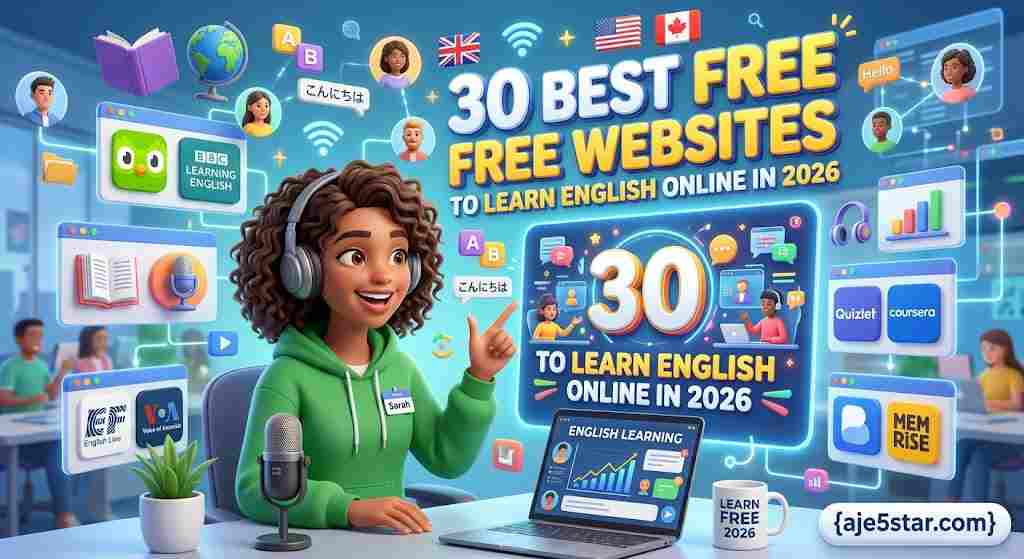
In this guide, we explore 30 of the best websites to learn English online in 2026. We explain what each website offers, who should use it, and how to combine different resources to improve your speaking, listening, reading, and writing skills.
The Short Version
- You do not need all 30 sites. Pick two or three and use them every day.
- Practise all four skills: listening, speaking, reading and writing.
- 20 to 50 minutes a day is better than one long session each week.
- Do not fear mistakes. They show you what to practise next.
Table of Contents
- Why learn English online?
- 30 best free websites to learn English
- Best websites for different English skills
- How to learn English faster at home
- A 30-day English learning plan
- Common mistakes English learners should avoid
- Frequently asked questions
- Final thoughts
1. Why learn English online?
English is widely used in international business, education, science, technology, travel, and online communication.
Learning English can help you:
- Communicate with people from different countries.
- Understand international educational resources.
- Apply for more job opportunities.
- Study online courses.
- Travel with greater confidence.
- Understand English-language videos and websites.
- Develop professional communication skills.
Online learning is convenient because you can study from home, use a computer or smartphone, and practise at your own speed.
You can also choose resources that match your current English level.
For example, beginners may need basic vocabulary and simple conversations, while advanced learners may want to improve professional writing, pronunciation, and complex grammar.
2. 30 best free websites to learn English online in 2026
The following websites offer different types of English learning resources. Some are completely free, while others provide free lessons alongside optional paid features. Always check the current terms before registering or purchasing anything.
A. Best websites for complete beginners
1. Duolingo
Duolingo is a popular language-learning platform that uses short lessons, exercises, and progress tracking to encourage daily practice.
Its English course can help beginners develop basic vocabulary, sentence structure, and language recognition.
What you can learn:
- Basic English vocabulary.
- Simple sentences.
- Everyday expressions.
- Grammar foundations.
- Reading and listening.
Best for: Beginners who want to build a daily learning habit.
Free access: A free learning experience is available, with optional paid subscriptions and features.
2. USA Learns
USA Learns provides English learning resources for adults, including beginner lessons, listening activities, vocabulary, grammar, and practical communication.
Its courses are particularly useful for people who want structured lessons.
What you can learn:
- Everyday English.
- Basic grammar.
- Listening comprehension.
- Reading and vocabulary.
- English for daily life.
Best for: Adult beginners and people learning English for everyday communication.
Free access: The platform offers free learning resources.
3. British Council LearnEnglish
The British Council provides English learning materials for people at different levels.
You can find lessons covering grammar, listening, reading, speaking, vocabulary, and professional English.
What you can learn:
- Beginner English.
- Grammar and sentence construction.
- Listening and reading.
- Business English.
- Everyday communication.
Best for: Learners who want organized lessons and exercises.
Free access: Its learning materials are free, while additional courses and services may be paid.
4. BBC Learning English
BBC Learning English offers audio lessons, videos, vocabulary explanations, grammar tutorials, and listening exercises.
Its short learning programmes make it easier to practise English regularly.
One useful programme is 6 Minute English, which helps learners develop listening and vocabulary skills through interesting discussions.
What you can learn:
- English pronunciation.
- Vocabulary.
- Grammar.
- Listening comprehension.
- English used in everyday situations.
Best for: Beginners through advanced learners who want regular listening and language practice.
Free access: Its learning content is free.
5. Cambridge English
Cambridge English provides free learning activities for different language levels.
Students can practise vocabulary, grammar, reading, listening, and other English skills.
It also offers exam preparation resources and writing practice through its learning platform.
What you can learn:
- English vocabulary.
- Grammar.
- Reading comprehension.
- Writing practice.
- Exam preparation.
Best for: Students and learners preparing for English examinations.
Free access: It provides free online activities and selected learning resources.
B. Best websites for grammar and vocabulary
6. Perfect English Grammar
This website provides explanations and exercises covering many English grammar topics.
It is especially useful when you want to understand why a sentence is written in a particular way.
What you can practise:
- Present, past, and future tenses.
- Conditionals.
- Modal verbs.
- Passive voice.
- Prepositions.
- Grammar exercises.
Best for: Learners who want to improve their grammar.
7. EnglishClub
EnglishClub provides lessons, quizzes, grammar explanations, vocabulary activities, and resources for English learners and teachers.
What you can practise:
- Grammar.
- Vocabulary.
- Pronunciation.
- Listening.
- Speaking.
- English quizzes.
Best for: Learners who want a broad collection of English lessons.
8. ManyThings
ManyThings offers English learning activities, including pronunciation practice, vocabulary exercises, sentence activities, and listening exercises.
It can be particularly useful for repeating short exercises until you understand them.
Best for: Beginners who need repetition and practical language drills.
9. WordReference
WordReference is an online dictionary and translation resource that helps learners understand unfamiliar words and expressions.
You can explore definitions, translations, and examples.
Best for: Understanding vocabulary and checking word meanings.
10. Cambridge Dictionary
Cambridge Dictionary provides definitions, example sentences, pronunciation information, and grammar resources.
It is useful when you want to understand how a word is used in real sentences.
Best for: Vocabulary, spelling, and pronunciation.
C. Best websites for listening and pronunciation
11. VOA Learning English
VOA Learning English offers news stories, audio programmes, videos, and vocabulary resources for English learners.
Some materials are presented at a slower pace to help learners understand spoken English.
What you can practise:
- Listening comprehension.
- News vocabulary.
- Pronunciation.
- Reading.
- Everyday expressions.
Best for: Learners who find normal-speed English difficult to understand.
12. ELLLO
ELLLO provides listening lessons featuring different speakers and accents.
It is helpful because English is spoken in many countries, and learners benefit from becoming familiar with different speaking styles.
What you can practise:
- Listening to conversations.
- Understanding different accents.
- Vocabulary.
- Listening comprehension questions.
Best for: Learners who want to understand international English.
13. ESL Lab
ESL Lab offers listening exercises based on everyday situations.
You can listen to conversations and answer questions to test your understanding.
Best for: Improving listening comprehension and understanding spoken conversations.
14. YouGlish
YouGlish helps you discover how words and phrases are pronounced in real video examples.
Instead of learning pronunciation only from written definitions, you can hear words being used by different speakers.
Best for: Pronunciation, listening, and understanding natural speech.
Free access: It offers free access with usage limits and optional paid features.
15. TalkEnglish
TalkEnglish provides spoken English lessons, listening activities, and practical expressions for common situations.
What you can practise:
- Everyday conversations.
- Workplace English.
- Travel expressions.
- Common questions and answers.
- Speaking confidence.
Best for: Learners who want to practise practical spoken English.
D. Best websites for reading and writing
16. News in Levels
News in Levels presents news stories in different language difficulty levels.
This approach helps learners read interesting content without immediately facing complicated vocabulary.
Best for: Improving reading comprehension and learning vocabulary through news.
17. Breaking News English
This website provides English lessons based on current and interesting news topics.
Lessons can include reading, listening, vocabulary, grammar, and comprehension exercises.
Best for: Students who want to learn English through news stories.
18. Write & Improve
Write & Improve helps learners practise written English and receive automated feedback.
You can submit writing exercises and use the feedback to identify areas for improvement.
Best for: Improving writing and learning from mistakes.
19. Purdue Online Writing Lab
Purdue OWL provides guidance on grammar, academic writing, research, citations, and other writing skills.
It is particularly useful for students who need to write essays, assignments, and formal documents.
Best for: Academic writing and improving written communication.
20. engVid
engVid offers English lessons through educational videos from different teachers.
You can explore grammar, vocabulary, pronunciation, writing, and everyday English.
Best for: Visual learners who prefer explanations through video lessons.
E. More useful English learning websites
21. Oxford Online English
Oxford Online English offers video lessons and learning materials covering grammar, pronunciation, speaking, listening, and professional communication.
Best for: Learners who prefer structured video explanations.
22. LearnEnglish Teens
This British Council resource is designed for teenage English learners.
It includes activities, reading materials, listening practice, grammar exercises, and exam tips.
Best for: Teenagers who want age-appropriate learning materials.
23. LyricsTraining
LyricsTraining uses music-based activities to help learners practise listening and recognize words.
You listen to songs and complete missing words in interactive exercises.
Best for: Learners who enjoy music and want to practise listening.
Some content and features may have usage limits or paid options.
24. Anki
Anki is a flashcard tool that uses spaced repetition to help people remember information.
You can create your own English vocabulary cards and review them regularly.
Best for: Memorizing new words and expressions.
25. Quizlet
Quizlet provides digital flashcards and study activities that can help learners review English vocabulary.
You can explore existing study sets or create your own.
Best for: Vocabulary revision and quick study sessions.
Some tools and features require a subscription.
26. Merriam-Webster
Merriam-Webster offers dictionary definitions, pronunciation, word examples, and vocabulary resources.
It is particularly useful for learners interested in American English.
Best for: Word definitions, spelling, and American English vocabulary.
27. Oxford Learner’s Dictionaries
Oxford Learner’s Dictionaries provides learner-friendly definitions, example sentences, and pronunciation information.
It helps learners understand how words are used in context.
Best for: Intermediate learners who want clearer explanations of English vocabulary.
28. Free4Talk
Free4Talk is a platform where language learners can find other people to practise conversations with.
Conversation practice can help you become more comfortable using English.
Best for: Speaking practice with other learners.
As with any open conversation platform, protect your personal information and be careful when interacting with strangers.
29. EF English Live
EF provides English learning resources, articles, and educational materials covering grammar, vocabulary, and other language topics.
Check the availability and payment requirements of individual lessons and courses.
Best for: Exploring English learning resources and grammar explanations.
30. OpenLearn
OpenLearn, from The Open University, offers free courses and educational resources across different subjects.
Although it is not exclusively an English learning platform, students can use its reading materials to practise comprehension, expand vocabulary, and develop independent study habits.
Best for: Independent learners who want to improve their reading and study skills.
3. Best websites for different English skills
You do not need to use all 30 websites. Choose resources based on the skill you want to improve.
| Your learning goal | Recommended websites |
|---|---|
| Start learning English | Duolingo, USA Learns |
| Improve grammar | British Council, Perfect English Grammar |
| Learn new vocabulary | Cambridge Dictionary, Anki |
| Improve listening | BBC Learning English, VOA, ELLLO |
| Improve pronunciation | YouGlish, BBC Learning English |
| Practise speaking | TalkEnglish, Free4Talk |
| Improve reading | News in Levels, Breaking News English |
| Improve writing | Write & Improve, Purdue OWL |
| Prepare for exams | Cambridge English, British Council |
| Learn through videos | engVid, Oxford Online English |
Not Sure Where to Start? Try This Trio
| Skill | Website | How to Use It |
|---|---|---|
| Grammar and structure | British Council LearnEnglish | One lesson and its exercises each day |
| Listening | BBC Learning English | One short programme, listened to twice |
| Vocabulary | Anki or Quizlet | Review 5 to 10 new words every day |
4. How to learn English faster at home
Finding good websites is only the beginning. You also need a learning routine that helps you practise regularly.
Here are 10 practical methods.
1. Learn a few new words every day
Start with five to ten useful words.
Write down each word, its meaning, and one example sentence.
For example:
- Improve — to become better.
- Opportunity — a chance to do something.
- Communicate — to share information.
- Develop — to grow or make something better.
- Confidence — belief in your ability.
Review these words regularly.
2. Listen to English every day
Listening helps you become familiar with pronunciation, rhythm, and common expressions.
Try listening to a short BBC Learning English or VOA lesson every day.
Start with material you can mostly understand. Increase the difficulty gradually.
3. Speak even when you are alone
You do not always need another person to practise speaking.
Describe what you are doing, explain your daily routine, or read a short paragraph aloud.
For example:
“Today, I am learning English. I want to improve my vocabulary and become more confident when speaking.”
This simple activity helps you practise forming sentences.
4. Read simple English articles
Choose subjects you enjoy, such as technology, sports, education, business, or entertainment.
Read a short article and write down unfamiliar words.
Do not stop every few seconds to translate everything. Try to understand the main idea first.
5. Watch English videos with subtitles
Begin with English subtitles if you find spoken English difficult.
Listen to the speaker and read the subtitles at the same time.
Later, try watching short sections without subtitles.
6. Practise writing every day
Write a few sentences about your day.
For example:
“Today I woke up early. I studied English for 30 minutes. I learned five new words and listened to an English lesson.”
Review your writing and look for repeated mistakes.
7. Repeat sentences aloud
This technique is often called shadowing.
Listen to a short recording, pause, and repeat what the speaker said. Try to copy the rhythm and pronunciation.
You can use BBC Learning English, YouGlish, or other listening resources.
8. Use a dictionary correctly
When you discover a new word, check:
- Its meaning.
- Its pronunciation.
- Its part of speech.
- Example sentences.
- Common expressions using the word.
This helps you understand more than a simple translation.
9. Find opportunities to communicate
Practise with a trusted language partner, teacher, or conversation group.
You will make mistakes. That is a normal part of learning.
10. Measure your progress
At the end of each week, review what you have learned.
Ask yourself:
- Can I understand more spoken English?
- Have I learned new vocabulary?
- Can I form better sentences?
- Am I more confident when speaking?
- What still gives me difficulty?
Use your answers to plan the next week.
5. A simple 30-day English learning plan
You can use this beginner-friendly schedule to build a consistent learning habit.
| Days | Learning activity | Daily target |
|---|---|---|
| 1–5 | Basic vocabulary and grammar | Learn 5–10 words |
| 6–10 | Listening practice | Listen for 15 minutes |
| 11–15 | Reading and comprehension | Read one short article |
| 16–20 | Speaking and pronunciation | Speak for 10 minutes |
| 21–25 | Writing practice | Write one short paragraph |
| 26–30 | Review and practical communication | Review and practise all four skills |
Suggested daily study routine
- 10 minutes: Vocabulary.
- 15 minutes: Listening.
- 10 minutes: Reading.
- 10 minutes: Speaking.
- 5 minutes: Writing or reviewing mistakes.
Total: 50 minutes per day.
If you have less time, start with 15 or 20 minutes. A routine you can maintain is more valuable than an ambitious schedule you abandon.
6. Common mistakes English learners should avoid
Trying to learn too many words at once
Memorizing hundreds of words without using them can make learning difficult.
Learn fewer words and practise using them in sentences.
Being afraid of making mistakes
Mistakes help you understand what needs improvement.
Do not wait until your English is perfect before speaking.
Studying grammar without practising
Knowing grammar rules does not automatically make you a confident speaker.
Combine grammar lessons with listening, speaking, reading, and writing.
Depending entirely on translation
Translation can help beginners, but try to understand simple English explanations and example sentences as your level improves.
Using too many learning websites
Jumping between dozens of resources can waste time.
Choose two or three websites and use them consistently before adding more.
Expecting instant fluency
Learning a language takes time. Your progress depends on your starting level, study habits, exposure, and opportunities to practise.
7. Frequently asked questions
Can I learn English online for free?
Yes. Websites such as BBC Learning English, British Council LearnEnglish, VOA Learning English, Cambridge English, and USA Learns offer free learning resources. Some other platforms provide free access with optional paid features.
What is the best website to learn English for beginners?
USA Learns and Duolingo are useful starting points for beginners. British Council LearnEnglish is another strong option for structured grammar and language practice.
Can I learn English at home without a teacher?
Yes. You can build vocabulary, grammar, reading, and listening skills using online resources. However, feedback from a teacher or language partner can be helpful for improving spoken communication.
How can I improve my English speaking skills?
Practise speaking aloud every day. Repeat sentences after native or fluent speakers, describe your daily activities, record yourself, and communicate with other learners.
How many hours should I study English each day?
There is no single required number. Start with 20 to 50 minutes if possible, then adjust your routine according to your schedule and learning goals.
Which website is best for English grammar?
British Council LearnEnglish and Perfect English Grammar offer useful grammar explanations and exercises.
Which website is best for English pronunciation?
YouGlish helps learners hear words used in real videos, while BBC Learning English provides pronunciation lessons and listening activities.
Can I learn English using my smartphone?
Yes. Most of the resources in this guide can be accessed through a mobile browser, and some offer dedicated mobile applications.
How long does it take to become fluent in English?
There is no universal timeline. It depends on your starting level, the amount of practice you receive, your goals, and how regularly you use English.
8. Final thoughts: Start learning English today
You do not need expensive lessons to begin improving your English. With the right online resources, a simple study plan, and consistent practice, you can develop your language skills from home.
Start with one website for grammar, one for listening, and one for vocabulary or speaking. Practise a little every day and gradually increase the difficulty.
Remember that becoming confident in English is a journey. You will make mistakes, learn new expressions, and improve over time.
Your next step is simple: choose one website from this list and complete your first English lesson today.
Visit Aje5star.com for more free educational resources, beginner-friendly technology tutorials, AI tools, digital skills guides, and practical learning tips.
Learn. Create. Grow. Build your future with Aje5star.